

San Diego Criminal Justice Memorial
Honorees
A memorial directory honoring deceased judges, prosecutors, and defense attorneys who advanced criminal justice in San Diego County.
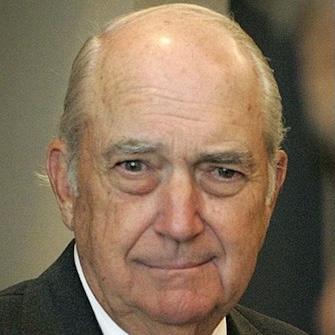
Hon. J. Lawrence Irving
1935-2024
A San Diego native and graduate of Point Loma High School, Judge James “Larry” Irving proudly served in the U.S. Army as a Private between 1954-56, and did a stint as a tank driver in post-World War II Germany. After separation from the Army, Judge Irving received his bachelor’s degree in business in 1959 from the University of Southern California (USC). He married his life soulmate, Fran, that same year, and thereafter pursued his law degree from USC, which he received in 1963. After graduating from USC, he returned to San Diego where he raised his family (two sons and eight grandchildren), and practiced law and served as a federal judge and private mediator for 50 years.
Judge Irving is widely regarded as one of San Diego’s most respected and accomplished trial lawyers, judges, and mediators. He successfully tried dozens of major cases in private practice, starting at Higgs, Fletcher & Mack, then with Jones, Tellam, Irving & Estes, and finally with Irving & Butz, APC. He was a highly effective advocate who approached every case with unwavering honesty, civility, integrity, and humility—earning a reputation as a legend in the trial bar for his skill, modesty, and even-handed demeanor. He was inducted as a member of both the American Board of Trial Advocates (ABOTA) and American College of Trial Lawyers (ACTL), and elected President of the San Diego ABOTA Chapter in 1972.
After practicing law for nearly 20 years, he was appointed to the federal bench by President Ronald Reagan in 1982. He presided over numerous high profile cases, including the J. David Dominelli fraud action, the John DeLorean bankruptcy action, the Nucorp class action litigation (a five month jury trial), the money-laundering case of San Diego businessman Richard Silberman, and the criminal trial resulting from the kidnapping and murder of Drug Enforcement Agent Enrique Camarena. He was a trial lawyer’s judge, who “let the lawyers alone” to try their cases without interference or “overcrowding” by the court. Known for never displaying a hint of ego in the way he conducted himself on the bench, he was viewed as the gold standard by which judges should be measured.
He served on the bench for eight years before voluntarily retiring in 1990 in protest of the minimum mandatory sentencing requirements enacted by Congress in 1987, which tied the court’s hands and prohibited consideration of the role, age, and background of the offender. In 1988 Judge Irving ruled that the U.S. Sentencing Guidelines were unconstitutional, but to his disappointment the Supreme Court upheld the Guidelines as constitutional the following year. “If I remain on the bench I have no choice but to follow the law,” Judge Irving said. “I just can’t, in good conscience, continue to do this.” So he retired—drawing national media attention, and recognition locally and nationally from many organizations for his integrity, fierce independence, and reverence for constitutionally-protected civil liberties.
In 1990, the Los Angeles Times noted Judge Irving was “widely regarded as one of the keenest judges in California.” Among many awards, Judge Irving was selected as Trial Judge of the year by the San Diego Trial Lawyers Association (now Consumer Attorneys of San Diego), Civil Libertarian of Year by the American Civil Liberties Union, Outstanding Jurist and Legend of the Bar by the San Diego County Bar Association (SDCBA), and as a recipient of the Bernard E. Witkin Award for Excellence in the Adjudication of the Law by the San Diego Law Library Foundation. On May 20, 2026, Judge Irving was named to the Distinguished Lawyer Memorial by the San Diego County Bar Foundation.
Judge Irving served on numerous boards over many years, including the SDCBA (1972-75), Pro Kids of San Diego, Armed Forces YMCA of San Diego, and Navy Seal Foundation in San Diego. He served as Chair of Governor Pete Wilson’s Judicial Screening Committee for the San Diego County Superior Court, Chair of Senator Barbara Boxer’s Federal Judicial Screening Committee for the U.S. District Court, Southern District of California, and on the Judicial and U.S. Attorney Advisory Committee for the Southern District of California for President George W. Bush. He also chaired several Magistrate Judge Merit Selection Panels for the Southern District of California.
After retiring from the federal bench, Judge Irving enjoyed a 20-plus-year career as a nationally sought-after mediator who was famous for resolving complex, high-stakes lawsuits, including the record-setting $7.2 billion Enron settlement, the Lincoln Savings & Loan case, the Jack in the Box E-Coli case, and the deal that removed former San Diego Mayor Bob Filner from office. He retired from the practice of law in 2012.
In 2010 John Freeman wrote a biography of Judge Irving entitled, “A Velvet Gavel”, which was named after Judge Irving’s calm, respectful, and unpretentious approach to judging and resolving disputes. Judge Irving is remembered as a “giant of a lawyer and judge” and a “trial lawyer’s dream trial judge”—even handed, willing to listen, and open to competing arguments regardless of party. He is also remembered by scores of lawyers and judges as a wonderful teacher, role model, and gifted mentor. Judge Irving was and remains a paragon of excellence in all he did—a man of unquestioned honor and decency.